Sometimes my response to a book is much shorter than a review. Beside a passage in Every Day I Read by Hwang Bo-reum, translated by Shanna Tan, I wrote four words: “Same here for me.”
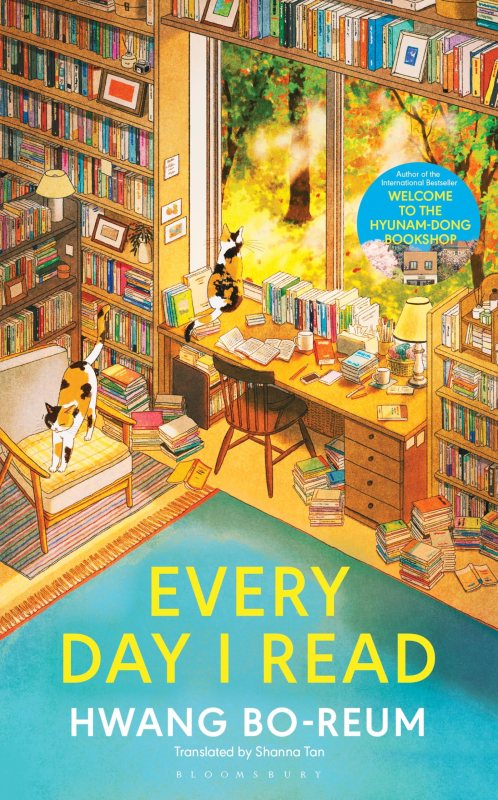
The passage described happiness through good relationships, meaningful conversations, time alone, and doing a good job at work. It ended with a sentence I saved in Readwise:
“Books taught me what my happiness looks like.”
My little annotation doesn’t explain much, but it tells me that I recognised something. Those ordinary things mattered enough for me to stop reading and leave a note.
I have more than 2,500 books, housed in my personal library in Huskvarna. Books take up a considerable amount of space in my life, quite literally. I have also been blogging about them since 2005. After all those years, I still find it interesting that a passage can say something plainly enough for my entire response to be, essentially, yes, this is what I’m feeling.
There is pleasure in recognition: A writer describes something, and I can see a little of my own life more clearly.
The list in that passage is useful because it is specific. Good relationships. A conversation worth having. Enough time to myself. Work I can do well. I can think about what each of those means in an ordinary week, and whether I am making room for it.
Time to myself, for example, includes reading and art. Those interests need actual time, even when they produce nothing I can put on a résumé or turn into an income. Reading a novel can be what I want to do that afternoon. It doesn’t need a second purpose to justify the first.
I enjoy learning, too. My psychology degree gives that interest a more structured form, with subjects to study and ideas to understand. But the books on my shelves allow for another kind of learning: following a question because it interests me, without knowing where it will lead or whether it will ever become useful.
Doing a good job matters to me, too. I have spent much of my working life supporting people, projects, and processes. I value being useful and helping clarify things. With Huskvarnas Kattvakt, that usefulness takes a very practical form: feeding a cat, cleaning a litter box, making time for play, and keeping the owner informed.
These are different kinds of work, but I can recognise something I value in both. Someone is depending on me to pay attention and follow through. The work deserves care.
The part I need to keep thinking about is how work fits alongside everything else. A job can be meaningful and still ask more of a person than they want to give. An interesting opportunity can also bring obligations that leave little room for reading, studying, art, or rest. Looking closely at those obligations helps me decide whether the opportunity suits the life I want.
That is where a passage like this becomes more than something pleasant to highlight. It gives me a few ordinary questions to ask. Will I have time for the people I care about? Can I do the work well? Will there be space to read and learn? What will a typical Tuesday look like?
I don’t expect a book to answer those questions for me. The answer depends on the choices in front of me, and sometimes I will have to make a trade-off. But having clear questions helps. “Enough time to myself” is easier to examine than a vague ambition to have a better life.
My four-word note was a small response to someone else’s description of happiness. Returning to it gives me a chance to be more precise about my own.
I want books and art to have room in my week. I want to keep learning, care for the people and cats who depend on me, and do useful work well. When I consider what to take on next, those are things I want the decision to protect.
That seems like a good reason to keep the highlight—and to pay attention to the person who wrote “Same here for me” beside it.


I’d love to hear your thoughts. Do share! 🖤