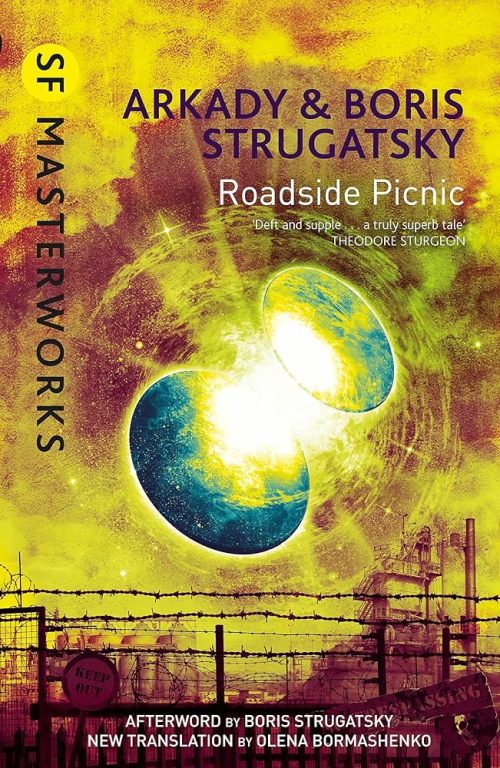
After finishing Roadside Picnic, I wondered about the point of the novel. I also wondered why it is classified as science fiction. The book blurb kind of oversells the novel as an emotionally driven rescue mission: a father enters the Zone one last time to save his mutated daughter, but it’s not what I expected.
I made a bunch of notes as I ploughed through the book. So the novel isn’t really about aliens, although it does involve alien visitation. It’s really about what people do when they’re confronted with something powerful they cannot understand: we study it, commercialise it, risk our lives for it, and project our own desires onto it.
It’s sci-fi because it’s got elements that include:
- an extraterrestrial visit
- the Zone where ordinary physical laws behave unpredictably
- alien artefacts with strange technological properties
- scientific attempts to study, classify and exploit those artefacts
- biological mutations affecting people near the Zone
- governments and industries reorganising themselves around alien tech.
But this is not conventional, tech-heavy sci-fi. The Strugatskys intentionally refuse to explain how the artefacts work or even whether humans interpret them correctly. The alien tech may be so far beyond human knowledge that it resembles magic, rubbish, or a natural disaster.
Redrick Schuhart, the protagonist, is not exploring space, but living with the social and personal fallout of contact with something incomprehensible. He even made a career out of it as a stalker (an illegal scavenger who sneaks into heavily guarded, extremely dangerous extraterrestrial areas known as “Zones” to steal and sell mysterious alien artefacts).
So what is the point of Roadside Picnic? It becomes clearer when the “roadside picnic” metaphor appears in the conversation between Richard Noonan and Dr Valentine Pillman, where the latter compares the Visitation to a picnic. And this comparison is humbling: humanity may not be important enough for aliens to even notice us.
Circling back to the Pillman-Noonan conversation, after a roadside picnic, travellers leave behind rubbish (bottles, batteries, oil) without considering the insects and animals that encounter it. Humanity may be those insects. Aliens briefly visited Earth and left behind strange, dangerous artefacts. Humans call the affected places “Zones”, but they never learn why the visitors came.
The book’s ending boggles me. I decided to organise my notes into a four-part series: expectation, classification, meaning, and ending. These upcoming posts will contain spoilers, so please read with caution.


I’d love to hear your thoughts. Do share! 🖤