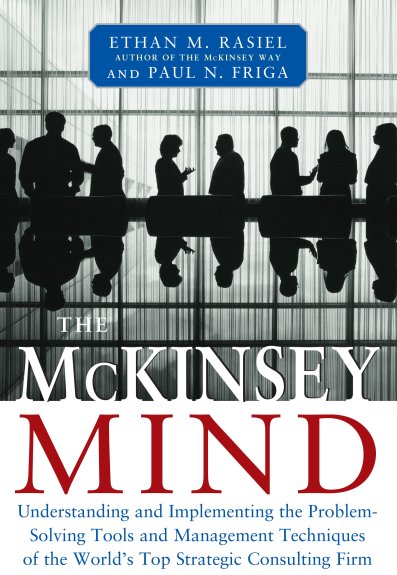
The McKinsey Mind is researched based on “interviews with and questionnaires from more than 75 McKinsey alumni who have successfully implemented the Firm’s techniques and strategies in their post-McKinsey organizations.”
Why read this book? Because you will discover a problem-solving and decision-making process; management techniques needed to implement that process in your own career; plus presentation (and communication) strategies that will ensure all your hard work in that earlier process pays off. The authors, Ethan M. Rasiel and Paul N. Frida, were both consultants at McKinsey & Company.
McKinsey, founded in 1923, is the world’s most successful strategic consulting firm. The McKinsey Mind reveals how McKinsey consultants deliver exceptional results for their clients. The book offers implementation lessons from McKinsey’s tried-and-tested problem-solving methodology for tackling organisational problems. I think we can use these methodologies even in our personal lives. After all, life is full of problems that require solving, and that’s what’s making life so interesting and worth living.
The book offers good insight into the consulting process, and as a former assistant to a partner in A.T.Kearney, I can relate to the ideas presented by the authors. Those consultants, although not from McKinsey, behaved much the same way. They think clearly and structure problems well. They’re analytical when designing analyses, gathering and interpreting data to solve complex problems. They’re effective at presenting ideas to the client and have strong management skills in handling teams, clients and themselves.
The book highlighted that intuition and data are two important pieces of the problem-solving puzzle. It is almost impossible to have all the relevant facts before making a decision. Therefore, decisions are often made partly on facts and partly on intuition (gut instinct and experience). One good thought that strikes me when doing analysis is “don’t boil the ocean.” In other words, don’t waste time analysing every aspect of a problem that doesn’t add significant value to the problem-solving process. Work smarter and not harder. Quality over quantity.
James G. Whelan at L, G, & E Energy said focused analysis matters more than volume, and that stems from good initial problem framing. Another point: Don’t accept “I have no idea.” This applies when we are researching for information and getting it from people. Probe—the book has details on how to do that. This not only applies to other people, but also to us.
In the chapter “Managing Yourself,” the authors mentioned, “a good assistant is a lifeline.” As an assistant, I’m glad our role is acknowledged, and the authors go on to say this group should be treated well and given opportunities to grow in their responsibilities and careers. I agree with that. Too often, support staff don’t get enough recognition and appreciation.
The book before this one, i.e., The McKinsey Way, is more descriptive and explains what McKinsey does. In The McKinsey Mind, it shows you how, but it doesn’t go into much detail, so I suggest readers refer to other resources to dig deeper into specific topics such as presentation, communication, managing teams, data analysis, and more. Now that we know the methodology offered by the experts, it is only right that we hone it further. Scratching the surface is insufficient.

