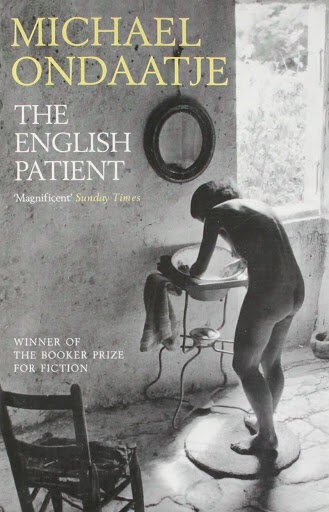
The English Patient is a historical fiction set in the hills of Tuscany during World War II—a tale of tragedy and passion. The novel doesn’t follow a chronological order; it alternates between the present and flashbacks, told from the point of view of each main character. It slowly reveals the characters’ identities as the story progresses.
I can’t believe it took me ages to begin reading The English Patient by Michael Ondaatje. I bought the book in May 2007 but only got around to reading it now. I plan to reread it—to savour its poetic prose and beautiful writing all over again. It even sparked in me an interest in reading Herodotus.
“She stands up in the garden where she has been working and looks into the distance.” The novel opens with Hana, a twenty-year-old nurse, gardening outside a villa in Italy. The war has just ended with the Germans retreating through the Italian countryside, leaving behind hidden bombs and mines everywhere. Hana decides to stay in the villa with her patient—an English patient —while the other nurses and patients leave to escape to a safer place. The patient’s identity is a mystery. She assumes he’s English by his manner and speech. Her only clue is his notebook: a copy of Herodotus’s The Histories marked throughout with his own notes, figures, and observations. He was found by the Bedouin tribe in the wreckage of a plane crash, burned beyond recognition, his whole body black. The Bedouins eventually returned him to a British camp in 1944. Hana reads to the English patient.
Later, a man named Caravaggio arrives at the villa, and it turns out that he is an old family friend of Hana’s father. He comes with bandaged hands as a result of being tortured by the Germans, who cut off his thumbs. He was a thief in Canada, and his skills were legitimised in the war, and he worked for British Intelligence in North Africa. He is addicted to morphine, and Hana provides him with a steady supply. In the villa, he reminisces with Hana and mourns with her over the death of her father in the war.
One day, Hana decides to play the piano in the library. Two soldiers hear the music and come to her. One of them is Kip, an Indian Sikh trained as a sapper or bomb-defuser in the British army. They come to clear the villa of bombs, knowing that the Germans frequently booby-trapped musical instruments. Over time, Kip and the English patient get along well and become friends. Kip camps in the villa’s garden. His job is extremely dangerous as he goes into town to clear more bombs from the area. Kip and Hana soon become lovers.
The English patient’s real name is not revealed until the second-to-last chapter. From 1930 to the start of World War II, he explored the North African desert, making observations, drawing maps, and searching for ancient oases in the sands. He then met a young man from Oxford, Geoffrey Clifton and his new wife, Katharine. They got along very well. However, an intense affair began between him and Katharine one night after he heard her read a passage from his book of Herodotus. He realised he was in love with her. Let the English patient reveal his story, for I will not say more beyond this point…
The novel—one of the best post-war stories—explores age-old themes such as national identity, the connection between body and mind, and love that transcends place and time. It is a beautifully written piece of work, poetic and thought-provoking. I will remember the story for a long, long time.

